SELECTED TRANSFORMATION EXPERIENCE

Transformation stories.
Business impact through delivery.

Four transformation themes from Aaron Tootle’s prior leadership roles at Kraft Heinz and Florette / Agrial Fresh Produce.

SELECTED TRANSFORMATION EXPERIENCE

Real operating challenges.
Measurable business impact.

Selected projects from Aaron Tootle’s prior leadership roles. These are not AT Consulting client engagements.

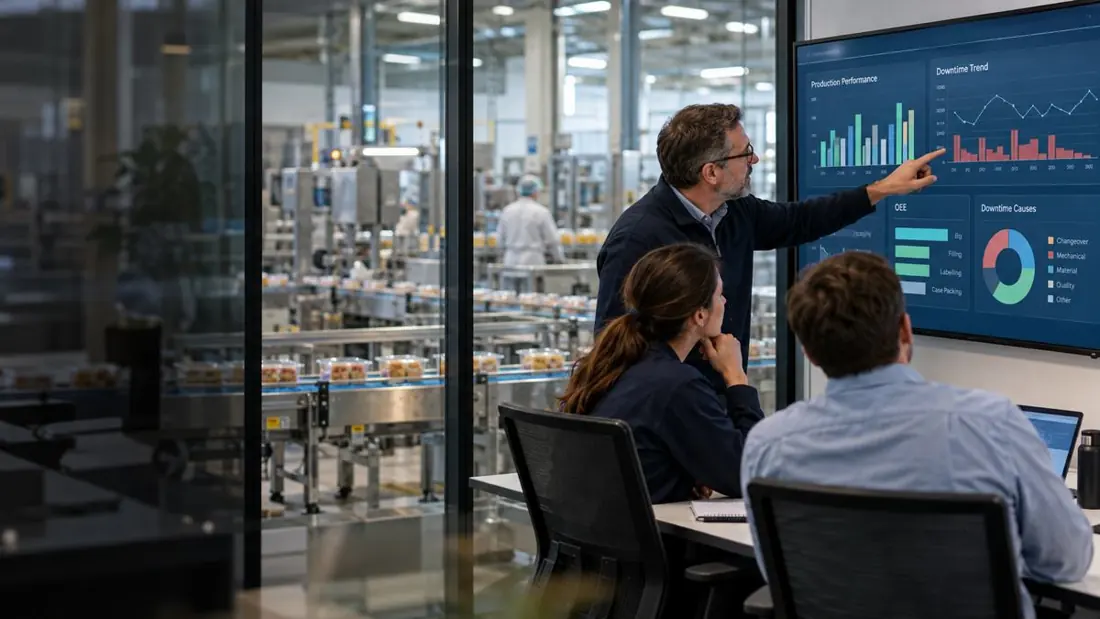
Illustrative operational leaders reviewing production performance
AI-generated illustrative scene · Not a client photograph
COMMERCIAL PERFORMANCE

£976k Finance-confirmed transformation savings.

A prioritised improvement portfolio translated operating opportunities into commercial value, with Finance involved in validation and delivery tracking.

£976k
Quantified savings
14
Completed initiatives
11 months
Leadership tenure
Explore the Transformation
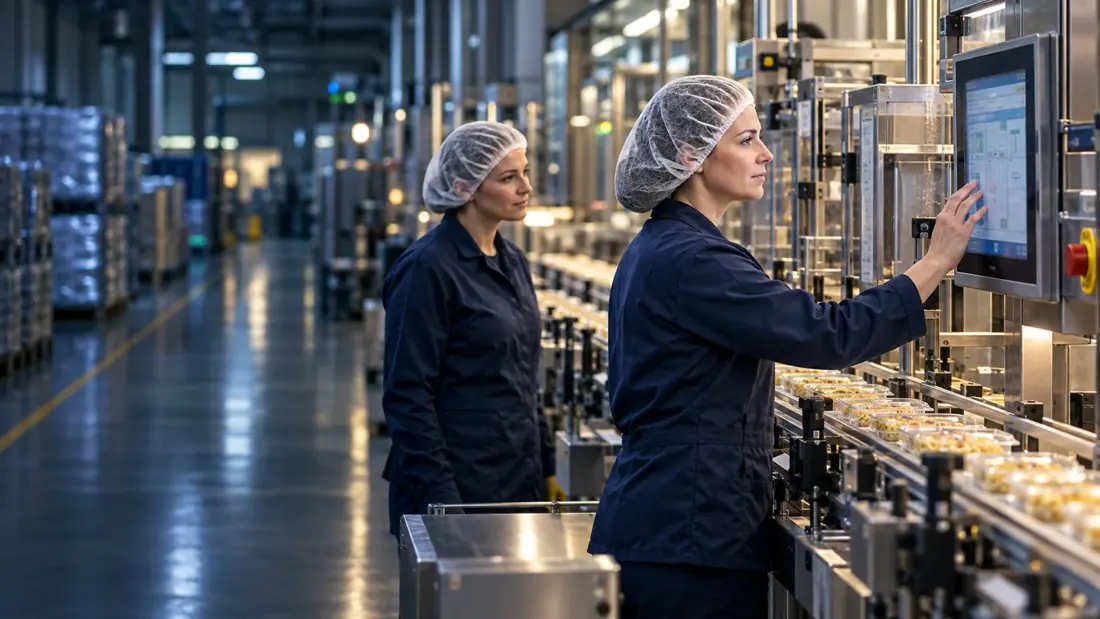
Illustrative operator using a digital manufacturing system
AI-generated illustrative scene · Not a client photograph
DIGITAL TRANSFORMATION

From paper routines to an adopted digital operating system.

Implementation across seven filling lines connected digital visibility, frontline training and ownership to the way the operation worked.

7 lines
Implementation scale
97%
Training completion
83%
Active usage, month 14
Explore the Transformation
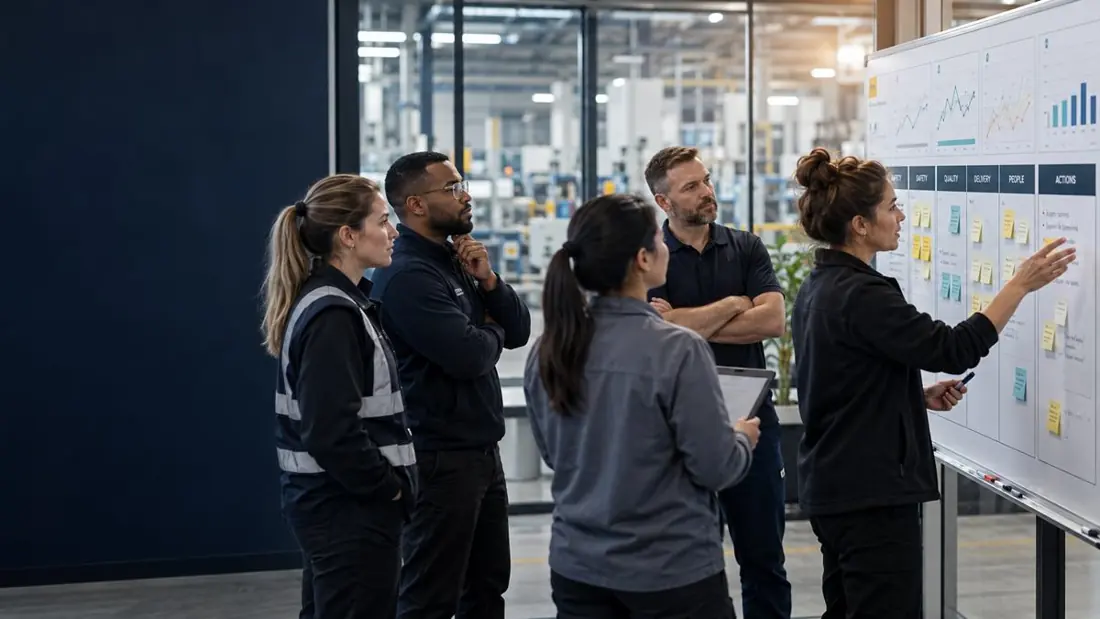
Illustrative daily tier meeting with team members reviewing a visual performance board
AI-generated illustrative scene · Not a client photograph
PEOPLE, GOVERNANCE & CHANGE

Food-safety standards owned by the workforce.

Risk-based training, operator involvement and practical follow-through supported the move from BRC Grade B to Grade AA.

B → AA
BRC audit grade
1 → 0
Major non-conformities
5 years
Audit findings reviewed
Explore the Transformation
DIGITAL CHANGE, WITH PEOPLE AT ITS CENTRE

Deployment is a milestone.
Adoption is the work.

Training reach and sustained usage measure different parts of implementation.

Selected founder-career experience · Kraft Heinz
97%Training completion
83%Active-user rate by month 14
01 / COMMERCIAL PERFORMANCE

Direct improvement effort toward commercial value.

Prioritise the right opportunities, validate the benefits and turn available resource into measurable performance.

Illustrative performance-review team
AI-generated illustrative scene · Not a client photograph
FLORETTE / AGRIAL FRESH PRODUCE

£976k portfolio-confirmed improvement portfolio

Fourteen completed initiatives carried £976,000 in quantified savings, confirmed in the year-end PIP tracker.

£976k
Savings recorded in portfolio
14
Completed initiatives
11 months
Leadership tenure
Explore the transformation
Business challenge
A broad improvement agenda needed clear commercial priorities and disciplined use of finite delivery resource.
Transformation
Established a prioritised portfolio spanning production performance, yield, labour productivity and material specifications.
Implementation
Worked with Finance and operational stakeholders to assess opportunities, assign resource and sequence delivery across four quarters.
Business impact
Fourteen completed initiatives carried £976,000 in quantified savings, confirmed in the year-end PIP tracker.
Sustainment
Financial validation and programme tracking kept project ownership, completion and benefits visible.
Supporting operational evidence
  • 20 targeted initiatives; 14 completed during an 11-month leadership tenure.
  • The value portfolio included OEE and yield uplift, direct labour savings and supplier/material specification changes.
FLORETTE / AGRIAL FRESH PRODUCE

Recover margin and capacity at the source of loss

The rework project delivered £46,080 in confirmed annual labour savings. Separate programmes recovered approximately 15 production hours per week and estimated £54.5k in annualised finished-goods yield value.

Explore the transformation
Business challenge
Rework, inconsistent changeovers and finished-goods rejects consumed labour, materials and productive capacity.
Transformation
Addressed the causes of loss through process settings, production sequencing, changeover standards and operator capability.
Implementation
Combined observation, trials, retraining and standardisation; benchmarked drying practices and transferred learning between operations.
Business impact
The rework project delivered £46,080 in confirmed annual labour savings. Separate programmes recovered approximately 15 production hours per week and estimated £54.5k in annualised finished-goods yield value.
Sustainment
Product settings, cleaning standards and trained changeover routines provided repeatable ways of working.
Supporting operational evidence
  • Rework fell from 3.024m to 1.008m bags/year: 66.7% reduction.
  • High Care OEE rose from 44.78% to 51.93%: +7.15pp, supported by sequencing, changeover, film and reliability improvements.
  • Approximately two changeovers/day eliminated; average remaining changeover time reduced by 39 minutes.
  • Finished-goods yield +4.7pp; eight Multiponds standardised; approximately 681,000 additional good bags/year.

These are distinct case examples, not an additive savings total. The £54.5k yield figure is an annualised estimate using the portfolio’s production volume and £0.08-per-bag value basis.

02 / OPERATIONAL TRANSFORMATION

Connect operational risk to the investment case.

Redesign how the operation works, with cross-functional ownership and an explicit commercial rationale.

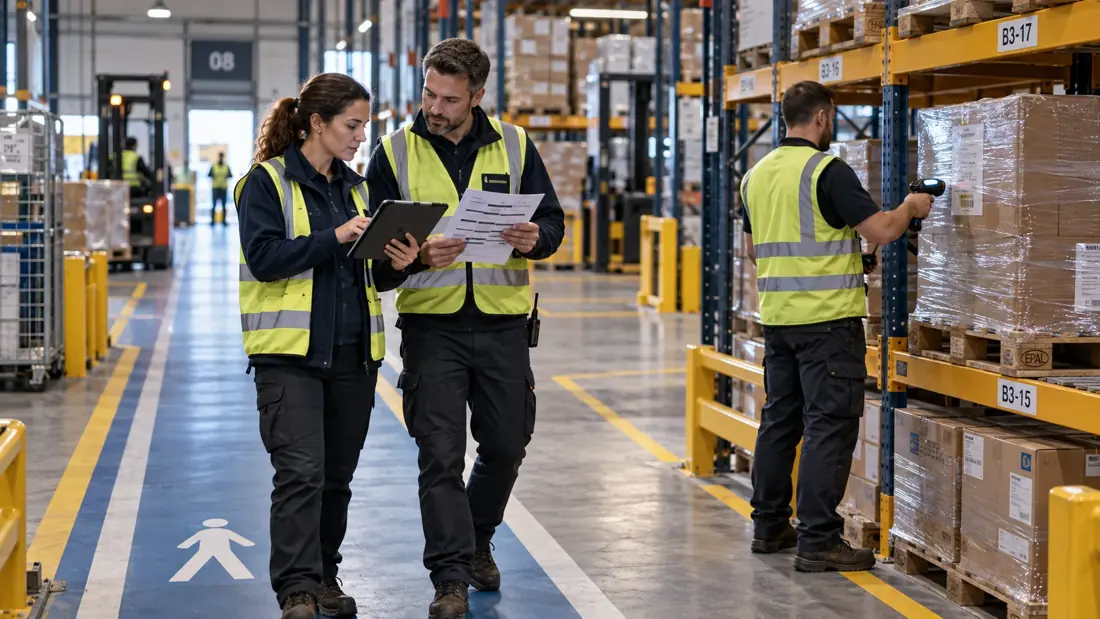
Illustrative material-flow coordination in a warehouse
AI-generated illustrative scene · Not a client photograph
KRAFT HEINZ

£1.3m capital investment secured for structural change

The portfolio records approximately 95% lower airborne particulate exposure. A retrospective value bridge estimates £986k in annualised value and approximately 15.8-month simple payback.

£1.3m
CAPEX secured
~95%
Lower particulate exposure
~15.8 months
Reconstructed simple payback
Explore the transformation
Business challenge
A manufacturing constraint persisting for more than 15 years combined airborne particulate exposure, inefficient workflows and commercial loss.
Transformation
Connected safety improvement to a quantified operating-model and investment case, securing £1.3m CAPEX for engineered controls and process changes.
Implementation
Combined workflow and material-flow redesign, labour optimisation and a supplier partnership for pre-weighed spice kits.
Business impact
The portfolio records approximately 95% lower airborne particulate exposure. A retrospective value bridge estimates £986k in annualised value and approximately 15.8-month simple payback.
Sustainment
Supplier-prepared kits and a simplified scan, label and routing process reduced on-site process complexity and supported repeatability.
Supporting operational evidence
  • Six FTE removed from the required operating model: £240k/year reconstructed labour value.
  • Absence reduced from 5.6% to 2.9%.
  • Weekly spice-related waste cost reduced from £15,847 to £8,773.
  • Approximately eight of more than 60 product varieties had transitioned to prepared kits by the programme period end.

The annualised value and payback are retrospective reconstructions, not independently verified realised returns. The portfolio treats a remembered ~18-month payback as contextual, with the recovered calculations supporting ~15.8 months. Safety improvement is excluded from the monetary bridge.

KRAFT HEINZ

An accountable operating model across warehouse and production

Material waste reduced by 32%. The portfolio models approximately £1.04m in annualised profit from improved plan attainment.

Explore the transformation
Business challenge
Reactive material supply and weak production-plan visibility pulled manufacturing operators away from production and masked an ownership gap.
Transformation
Transferred material-supply ownership to Warehouse and connected preparation directly to production requirements.
Implementation
Trained teams on the plan, introduced SAP/BOM visibility and established earlier preparation and shortage escalation with Planning.
Business impact
Material waste reduced by 32%. The portfolio models approximately £1.04m in annualised profit from improved plan attainment.
Sustainment
Warehouse accountability, preparation ahead of demand and direct escalation to Planning established a clearer operating rhythm.
Supporting operational evidence
  • Soups department Performance to Plan improved by 2.7pp.
  • At approximately 160m cans/year, the uplift equates to approximately 4.32m additional cans of plan attainment.
  • Materials prepared roughly two work orders ahead.

£1.04m is a portfolio-modelled annualised profit figure, not Finance-confirmed delivered savings. It is not added to the £976k programme value or other case estimates.

03 / DIGITAL & TECHNOLOGY ADOPTION

Move from deployment to an adopted operating system.

Technology, training and ownership were treated as one transformation, with usage measured separately from completion.

Illustrative supervisor using a digital production system
AI-generated illustrative scene · Not a client photograph
KRAFT HEINZ · SOUPS & PASTA FILLING

Digital operational management across seven filling lines

Approximately 87% of paperwork was digitised by year one; training completion reached 97%. Active-user rate reached 83% by month 14.

7 lines
Implementation scale
97%
Training completion
83%
Active usage, month 14
ACTIVE USAGE · MEASURED SEPARATELY FROM TRAINING
Within 12 months
79%
Month 14
83%
0%100%
Explore the transformation
Business challenge
KHMS had been live for around 18 months, but key management routines remained predominantly paper-based.
Transformation
Progressively moved operational checks, handovers and defect-management routines onto Power BI and digital platforms.
Implementation
Digitised the routines, trained users, clarified ownership and made digital visibility actionable through follow-through.
Business impact
Approximately 87% of paperwork was digitised by year one; training completion reached 97%. Active-user rate reached 83% by month 14.
Sustainment
Active-usage tracking, clear responsibility and protected start-of-shift routines connected technology use to operational behaviour.
Supporting operational evidence
  • Scope: seven filling lines and 12 staff.
  • Approximately 70% digitised within two months; approximately 87% by year one.
  • Active-user rate: 79% within 12 months, rising to 83% by month 14.
  • Defect closure: 12% to 68% over approximately 11 months.
  • Mean Time Between Intervention: 33 to 49.85 minutes.

97% measures training completion; 83% measures active adoption. This historical case demonstrates digital management-system adoption, not an AI implementation claim.

DEFECT CLOSURE
Starting rate
12%
After ~11 months
68%
0%100%
04 / PEOPLE, GOVERNANCE & CHANGE

Build the ownership that makes change stick.

Frontline involvement, clear standards and leadership routines connect implementation to sustained ways of working.

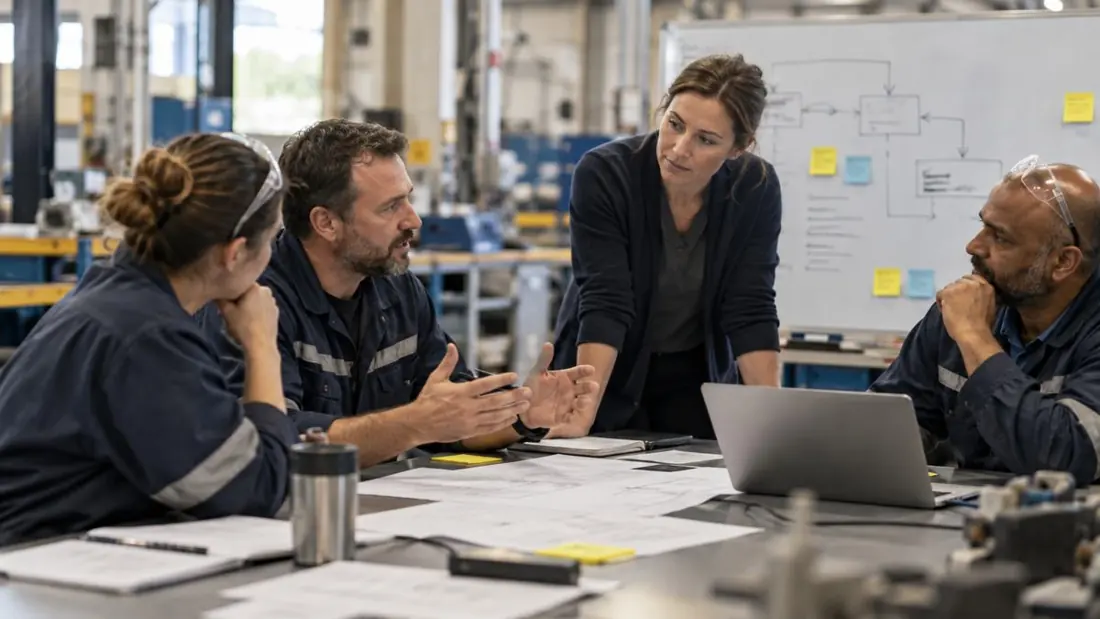
Illustrative workforce training and process-improvement discussion
AI-generated illustrative scene · Not a client photograph
FLORETTE / AGRIAL FRESH PRODUCE

BRC Grade B to AA through workforce-owned quality improvement

The site moved from BRC Grade B to Grade AA; major non-conformities reduced from one to zero.

B → AA
BRC audit grade
1 → 0
Major non-conformities
5 years
Audit history reviewed
Explore the transformation
Business challenge
A Grade B audit exposed a major High Care cleaning risk. Generic training did not sufficiently connect people to their area-specific responsibilities.
Transformation
Rebuilt quality training around five years of audit findings and the actual risks within each working area.
Implementation
Stopped production to create meaningful training time, listened to operator concerns and implemented changes to equipment, tools and cleaning practices.
Business impact
The site moved from BRC Grade B to Grade AA; major non-conformities reduced from one to zero.
Sustainment
A structured suggestion mechanism and recognition of practical ideas reinforced quality ownership and encouraged teams to challenge shortcuts.
Supporting operational evidence
  • Major non-conformities: 1 to 0. Minor non-conformities: 4 to 4.
  • Five years of audit findings reviewed to recalibrate HACCP/quality training.
  • Operator knowledge informed a more cleanable equipment-stand design.
AGRIAL FRESH PRODUCE · WIGAN HIGH CARE

Performance improvement through capability and accountability

High Care OEE moved from 41.0% to 49.7%, supported by a portfolio of operating improvements.

Explore the transformation
Business challenge
Low engagement, poor production visibility and dependence on Team Leaders weakened the operating environment.
Transformation
Combined practical leadership with standard work, loss visibility, better preparation and operator capability.
Implementation
Restored working PCs and system access, made the production plan directly available and used performance boards and recognition routines to reinforce participation.
Business impact
High Care OEE moved from 41.0% to 49.7%, supported by a portfolio of operating improvements.
Sustainment
Direct access to production information, visible standards and operator ownership gave teams a stronger basis for managing their own performance.
Supporting operational evidence
  • OEE improvement: +8.7pp, approximately +21.2% relative to baseline.
  • Startup-loss work identified a £21,021 annualised labour opportunity.
  • The finished-goods yield project is a separate evidence case.

The startup figure is an identified annualised opportunity, not a claim of verified realised savings.

Source: Aaron Tootle, Transformation Evidence Portfolio, August 2026. Founder-reported career evidence; underlying employer records have not been independently reviewed for this website. Project values and operating metrics retain their individual scopes; overlapping or estimated benefits are not aggregated into a headline total.

THE NEXT CONVERSATION

What needs to change for the business to perform?

Discuss the commercial challenge, the change required and the leadership capacity needed to make it happen.

Discuss Your TransformationA focused conversation about your business.